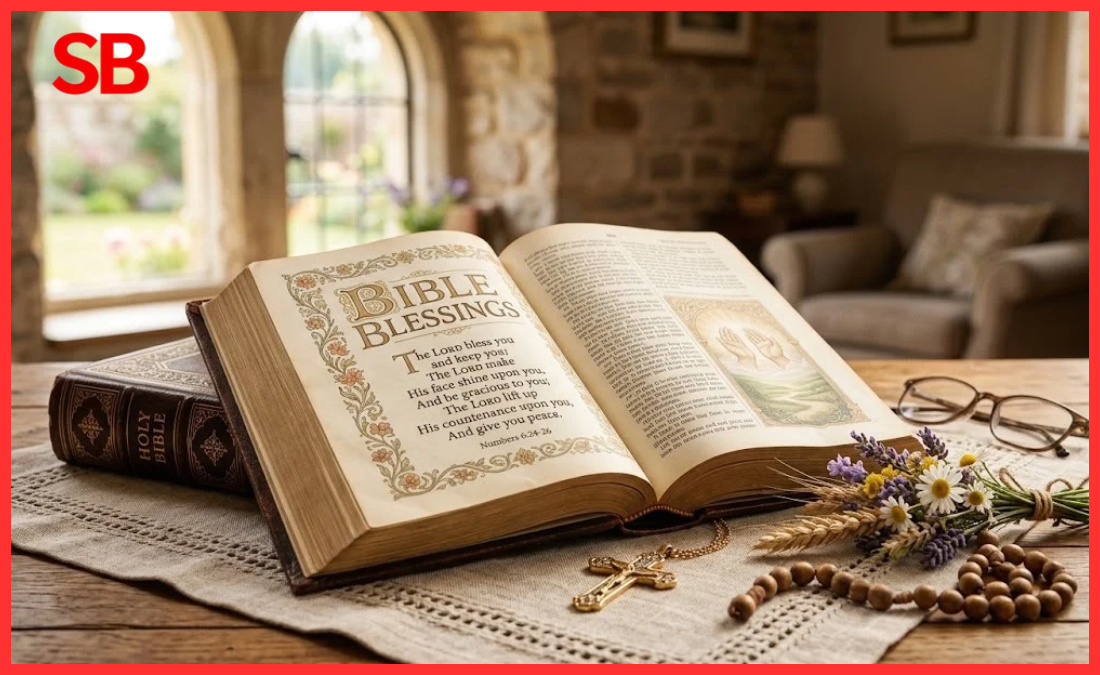
Bible blessings are often shared as simple words of encouragement, but their roots go much deeper. From ancient prayers to promises of peace, Scripture presents blessing as something connected to faith, obedience, gratitude and God’s relationship with His people.
The Meaning Behind Bible Blessings
The word “blessing” appears throughout the Bible in different contexts. It can describe God’s favor, a prayer for another person, material provision, spiritual well-being or an expression of gratitude.
That distinction matters. A biblical blessing is not necessarily a promise that life will always be easy. Scripture repeatedly describes hardship alongside hope, showing that faith does not remove every difficulty.
One of the best-known examples appears in Numbers 6:24-26. Known as the Priestly Blessing, it asks that the Lord bless and keep His people, make His face shine upon them, show them grace, and give them peace.
The passage is one of the clearest foundations for what many Christians now call a Bible blessing.
Where the Tradition Begins
The history of biblical blessings reaches back to the earliest books of Scripture.
In Genesis, blessings are closely connected with families, promises and inheritance. Abraham receives a major promise from God, including the statement that he would become a blessing to others.
Later biblical figures also give blessings to their children. Isaac blesses Jacob, while Jacob eventually blesses his sons. These accounts show that a blessing in the biblical world could carry considerable personal and spiritual significance.
These are verified biblical accounts rather than later traditions. They appear directly in the text of Scripture.
The Blessing of Peace
Peace is another recurring theme.
Jesus’ teachings place particular emphasis on peace, mercy and reconciliation. In the Beatitudes, recorded in Matthew 5, several groups are described as “blessed,” including the poor in spirit, those who mourn, the meek and the peacemakers.
The wording is important. The biblical use of “blessed” does not simply mean wealthy, successful or free from problems.
Instead, the passages connect blessing with a person’s spiritual condition and relationship with God.
That makes the modern habit of describing every good event as a “blessing” somewhat different from the broader biblical meaning.
Famous Bible Blessings People Still Share
Some passages have become especially popular in prayers, greeting cards, church services and personal messages.
Numbers 6:24-26 remains one of the most recognizable. Psalm 23 is another frequently quoted passage because of its themes of guidance, protection and trust.
Psalm 121 is also widely used when people seek words of comfort. Its central theme is God’s protection and watchfulness.
Philippians 4:7 is often remembered for its reference to the peace of God. It is particularly meaningful to readers looking for reassurance during uncertain periods.
These passages are not modern motivational sayings. They come from different biblical books, historical settings and literary traditions.
Are Bible Blessings Promises of Success?
This is where interpretation becomes important.
Some modern messages use biblical language to suggest that faith guarantees financial success, perfect health or an easy life. Scripture itself is more complicated.
The Bible contains examples of faithful people experiencing suffering, loss, persecution and uncertainty. The Book of Job is an especially prominent example, while the New Testament also records suffering among Jesus’ followers.
There is therefore no sound basis for claiming that every believer is guaranteed a trouble-free life.
Any message suggesting otherwise is an interpretation, not a universal promise stated throughout Scripture.
Blessings for Everyday Life
For many readers, Bible blessings are most useful when they are connected to ordinary moments.
A morning blessing may focus on guidance for the day ahead. A family blessing may ask for peace and protection. A blessing for someone facing difficulty may draw on biblical themes of courage, patience and hope.
The words can be personal without changing the meaning of the underlying passage.
That is why short Scripture-based blessings remain common in Christian communities. They provide a way to turn biblical themes into prayers or words of encouragement.
What Scripture Actually Emphasizes
Across different biblical books, several themes repeatedly appear: gratitude, faith, mercy, wisdom, peace, obedience and trust in God.
The emphasis is not simply on receiving something.
In many passages, blessing is also connected with becoming a blessing to others. Genesis 12:2 is particularly important in this regard, as God’s promise to Abraham includes the idea that he would be a source of blessing.
That broader meaning helps explain why Bible blessings continue to be used in personal prayers and messages today.
The Final Meaning of Bible Blessings
There is no single formula that defines every Bible blessing.
Some are direct prayers. Others are descriptions of people considered blessed. Still others are promises or expressions of God’s care.
What connects them is the recurring biblical emphasis on God’s presence, grace, peace and faithfulness.
For anyone searching for a Bible blessing, the strongest starting point is therefore not a collection of attractive words. It is the Scripture passage behind them.
Author Bio:
Written by the Headline Magazine editorial desk, covering faith, culture and human-interest subjects. The editorial approach focuses on clear biblical context, careful wording and factual presentation