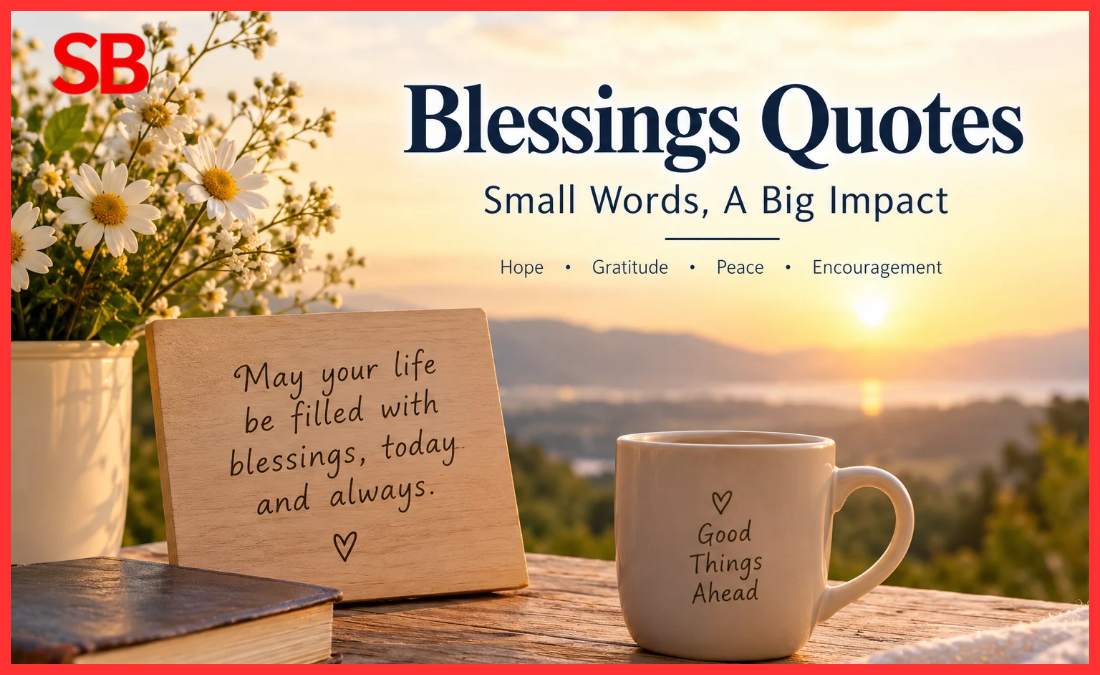
A blessing quote can be only a few words long, yet people often keep one for years. The reason is simple: these phrases are usually less about decoration and more about hope, gratitude, protection, faith, or wishing someone well.
Why Blessings Quotes Matter
The phrase “blessings quotes” covers a wide range of sayings. Some are religious. Others are simple expressions of gratitude or encouragement. A few are used during major moments such as birthdays, weddings, difficult periods, new beginnings, or the start of a journey.
There is no single official collection of blessings quotes. That distinction matters.
Many sayings shared online are presented as traditional, biblical, or attributed to famous writers without reliable evidence. Unless the original wording can be traced to a recognised text or a documented speaker, the attribution should be treated cautiously.
That does not necessarily make the words meaningless. It simply means their origin should not be confused with their modern popularity.
The Difference Between a Blessing and a Quote
A blessing traditionally carries a sense of wishing good upon another person. In religious settings, it can have a much deeper meaning, involving prayer, divine protection, peace, or favour.
A quote, by comparison, is simply a statement attributed to a person, text, or source.
When the two ideas meet, the result is what people commonly search for as a “blessings quote.” The words may ask for peace, express thanks for what someone already has, or offer hope for what comes next.
This is why the same type of quote can appear on greeting cards, social media posts, religious websites, wedding messages, and personal notes.
Religious Origins Are Often More Specific
Some of the best-known blessing language comes from religious scripture rather than modern social media.
One widely recognised example is the Priestly Blessing found in the Book of Numbers. It asks that the Lord bless and keep the recipient, make His face shine upon them, and grant peace.
The passage is documented in the biblical text itself. Its long history explains why variations of its wording continue to appear in prayers and messages today.
Other blessing phrases come from different religious traditions, prayers, hymns, and devotional writings. Their meanings depend heavily on their original context.
A short sentence removed from that context can sometimes take on a completely different meaning.
Why People Search for Blessings Quotes
The popularity of blessings quotes is not difficult to understand. People often look for the right words when ordinary conversation feels insufficient.
Someone may want to wish a friend well before a difficult journey. Another person may need a message for a birthday, wedding, graduation, or new job. Others search for words of comfort after a loss.
In those situations, the quote becomes a starting point.
It can communicate something personal without requiring a long explanation.
The Problem With Anonymous Quotes
There is one recurring issue with popular quote collections: attribution.
A sentence may circulate for years under the name of a famous author even though no reliable publication records show that the person ever wrote or said it. The wording may also change as it is copied from one website to another.
For that reason, claims such as “this is an ancient blessing” or “this was said by a particular famous person” should not automatically be accepted.
If there is no primary source, the safer description is an anonymous or commonly attributed saying.
That small distinction separates a documented quotation from internet folklore.
Blessings Quotes in Everyday Life
Not every blessing needs to be religious.
A person can use a blessing quote simply to express goodwill. Words about peace, happiness, strength, gratitude, kindness, or a brighter future can serve the same emotional purpose.
This broader use has helped blessings quotes move beyond formal religious settings.
Today, they can appear in private messages, social media captions, family conversations, and personal journals. The setting may have changed, but the central idea remains familiar: wishing something good for another person.
What Makes a Good Blessing Quote?
The strongest blessing quotes are usually clear rather than complicated.
They do not need impressive vocabulary. A few sincere words about peace, hope, protection, gratitude, or happiness can be more effective than a long passage.
Context also matters.
A quote appropriate for a wedding may not be suitable for someone experiencing grief. A religious blessing may be meaningful to one person but inappropriate for another. Choosing the right words requires understanding the person and the moment.
The Real Meaning Behind the Search
The mystery surrounding blessings quotes is not really about which sentence is the most beautiful.
It is about why people continue looking for these words.
The answer is visible in the situations where they are used. People turn to blessings when they want to express something positive, meaningful, or difficult to say themselves.
Some have ancient religious origins. Others are modern sayings with uncertain authorship. Some are simply personal wishes written in the form of a quote.
The important distinction is knowing which is which.
In the end, a blessings quote does not need a famous name attached to it to have value. Its meaning often comes from the person who chooses to share it, and from the moment in which those words are needed.
About the Author
James Carter is a human-interest writer covering culture, public stories, quotations, and the origins of popular sayings. His work focuses on separating documented information from claims that have grown through online repetition.